Back in the USSR (Moscow) - 2017
I visited Moscow in November 2017, at a time when the city was in the midst of a remarkable transformation. Friends who lived there spoke of how much had changed in recent years, and it was immediately noticeable. The streets felt clean, public spaces had been carefully restored, and places like Gorky Park reflected a city investing in itself.
What surprised me most, however, was not the architecture or the famous landmarks. It was the scale of Moscow. Despite being home to more than twelve million people, the city rarely felt overcrowded. Wide boulevards, expansive squares, and vast public spaces created a sense of openness that contrasted sharply with cities such as Paris, London, Barcelona, or New York, where overtourism often makes the streets feel permanently busy. Perhaps it was the quiet atmosphere of November, with winter slowly settling over the city, but Moscow moved at a slower, calmer rhythm than I had expected.
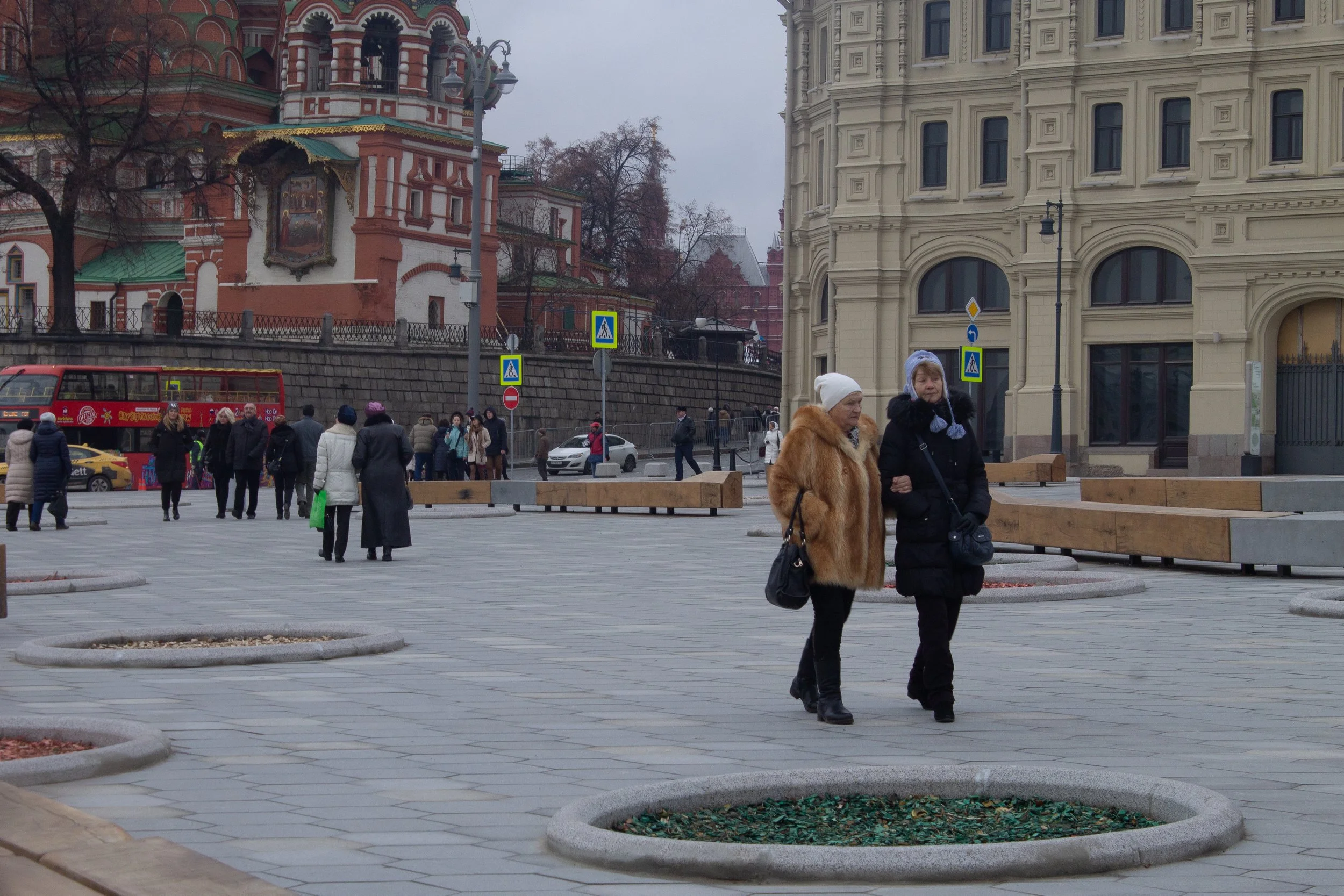
Back in the USSR (Moscow). Two ladies on a square.
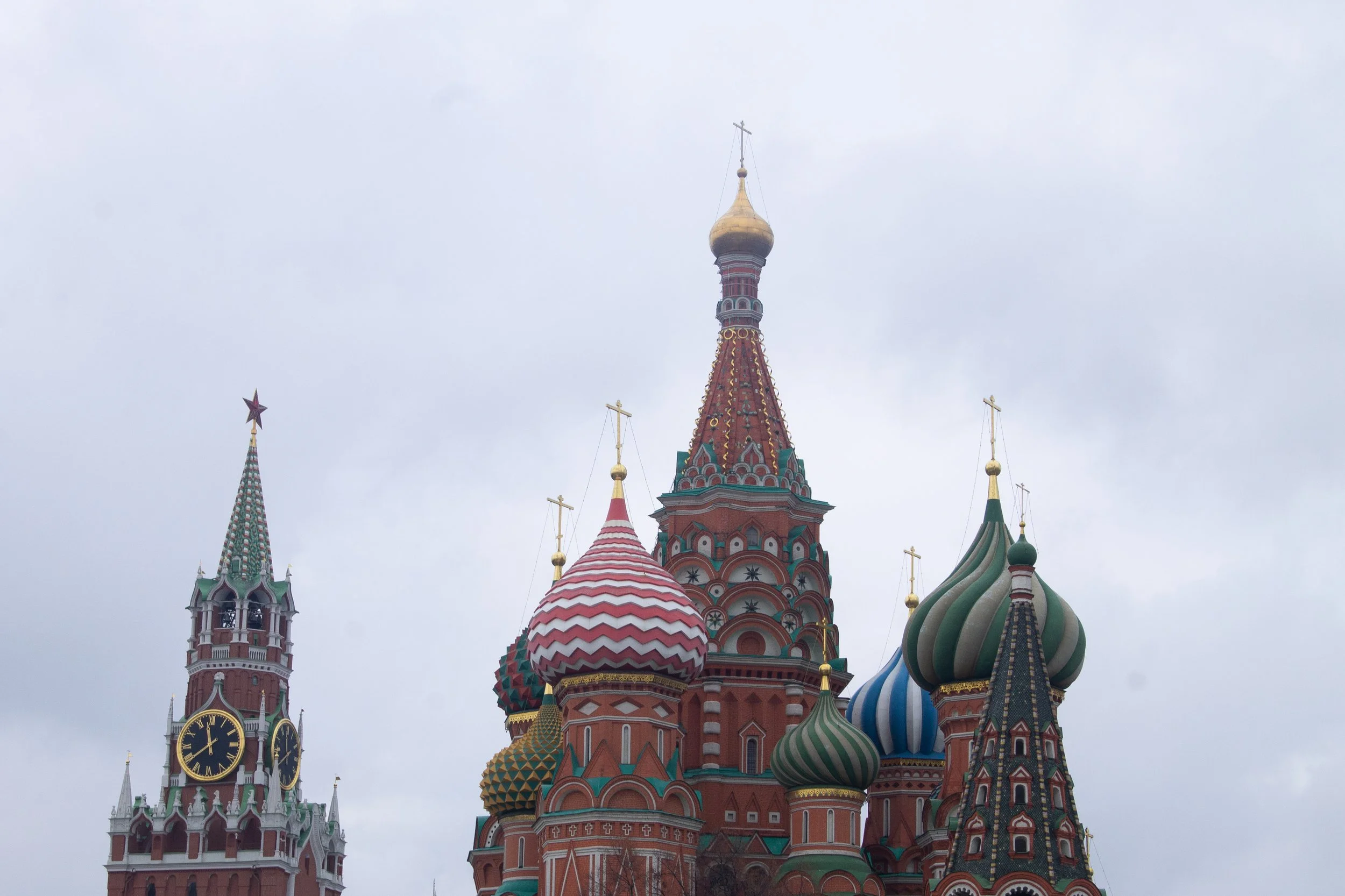
Back in the USSR (Moscow). Saint Basil's Cathedral.
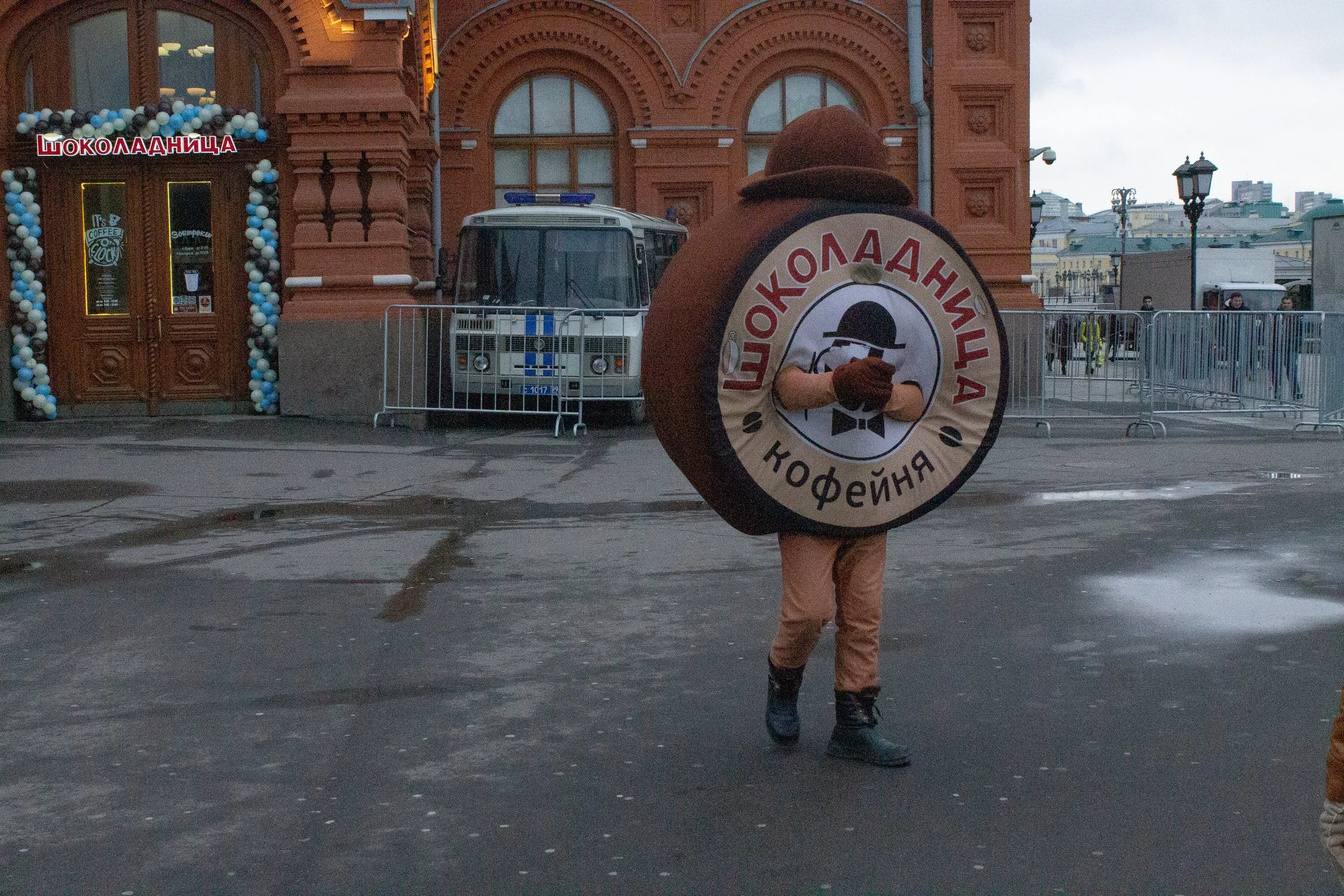
Back in the USSR (Moscow). Person in coffee suite.
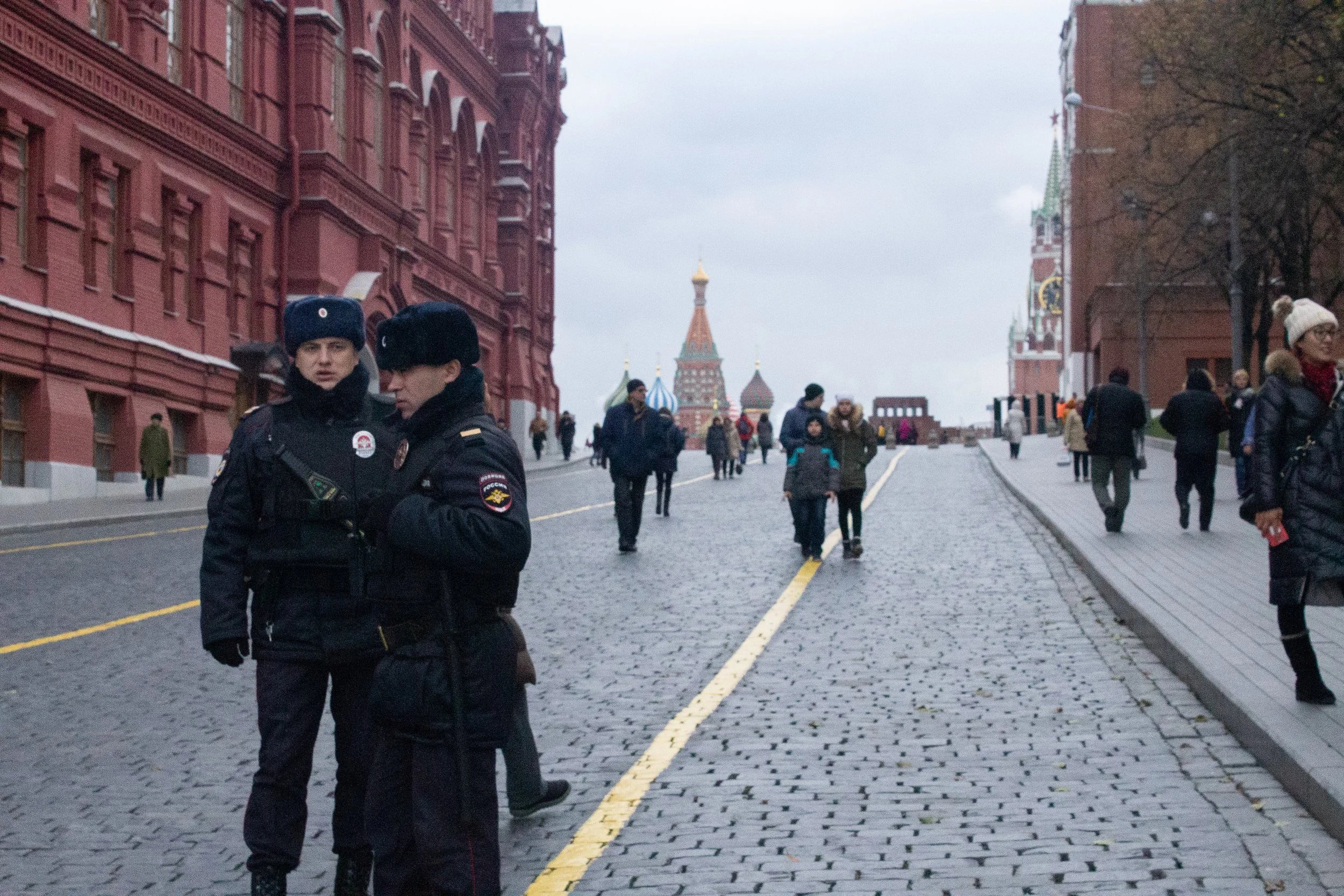
Back in the USSR (Moscow). Police officers on the Red Square.
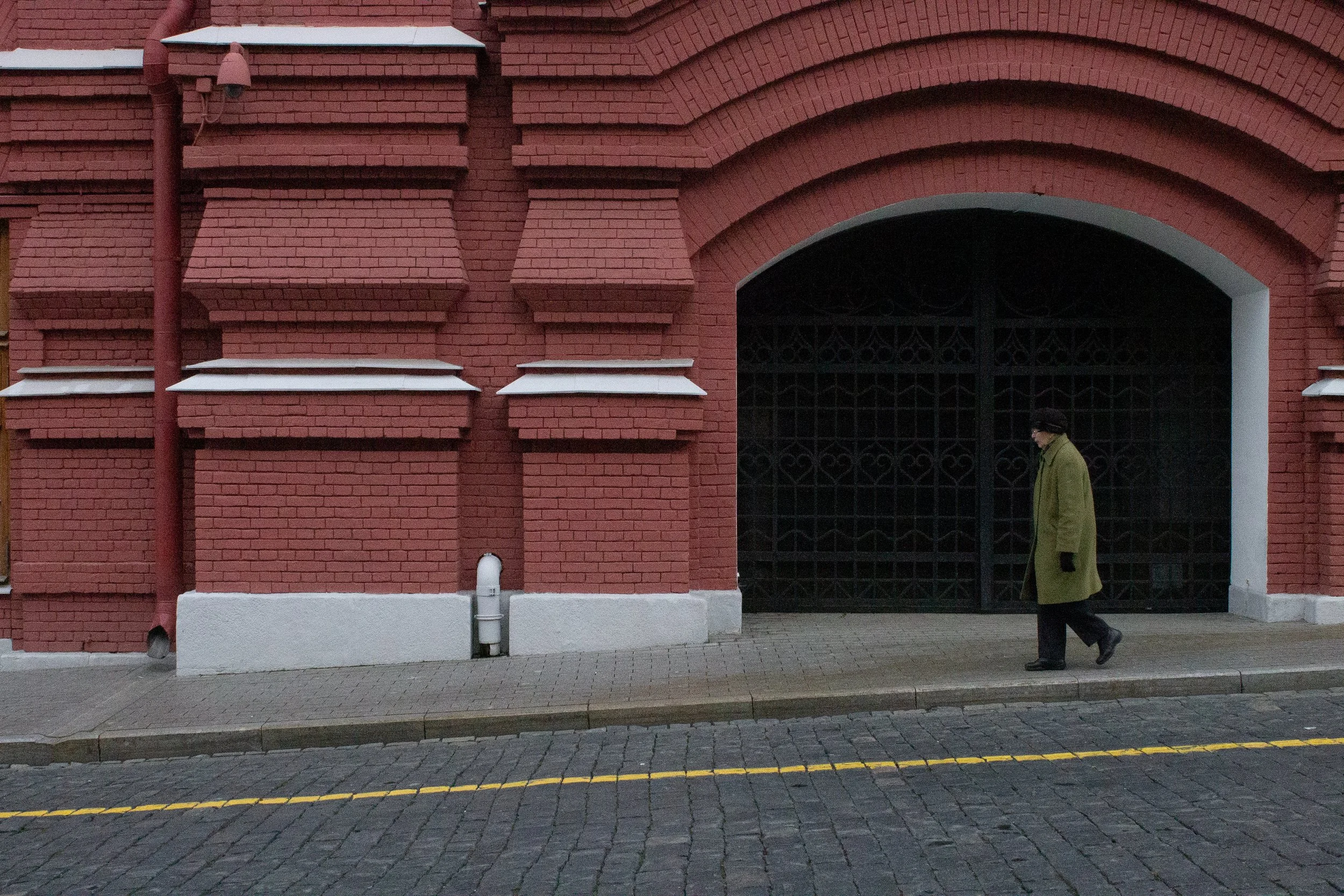
Back in the USSR (Moscow). Lady in Moscow.
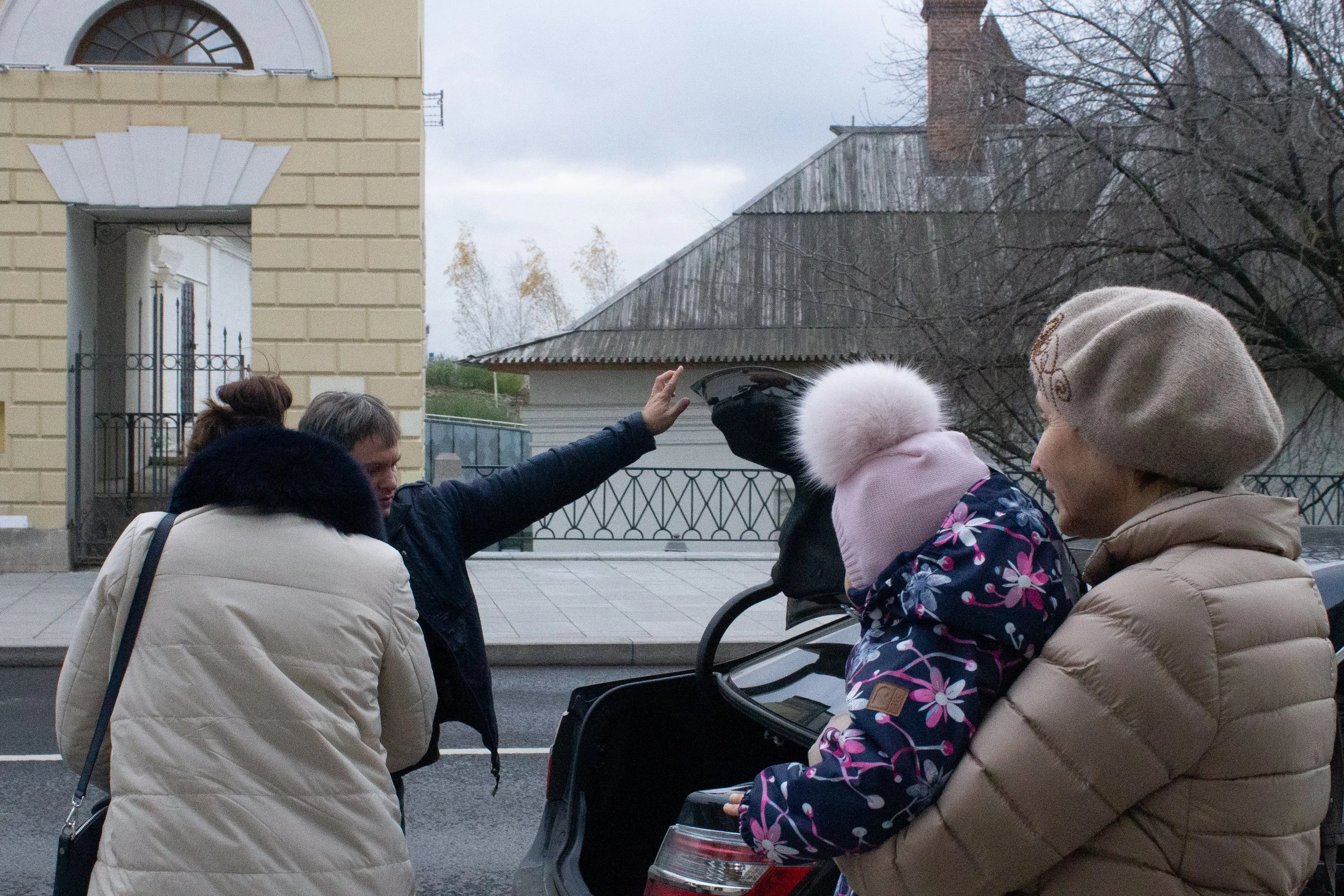
Back in the USSR (Moscow). Family after church.
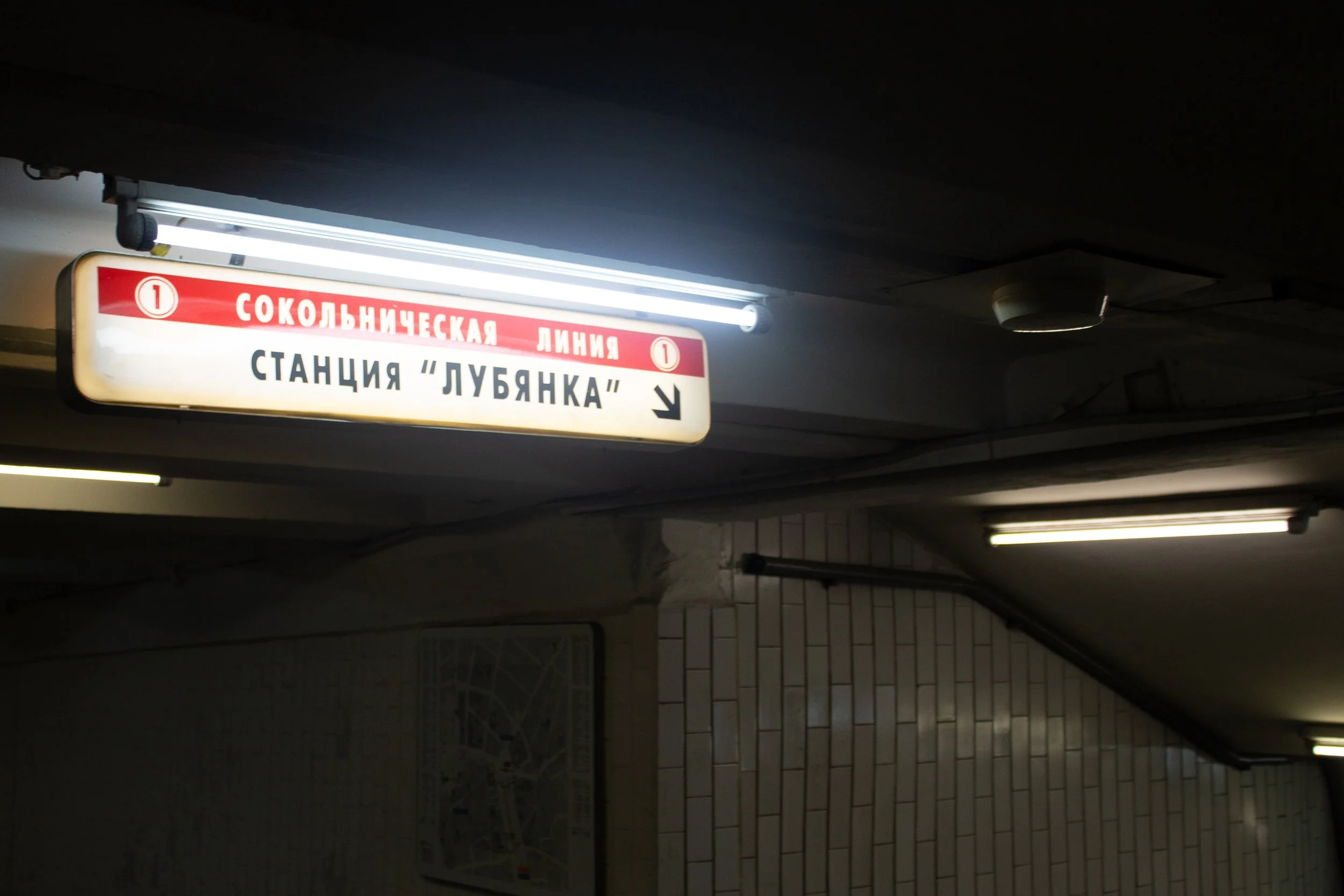
Back in the USSR (Moscow). Metro stop.
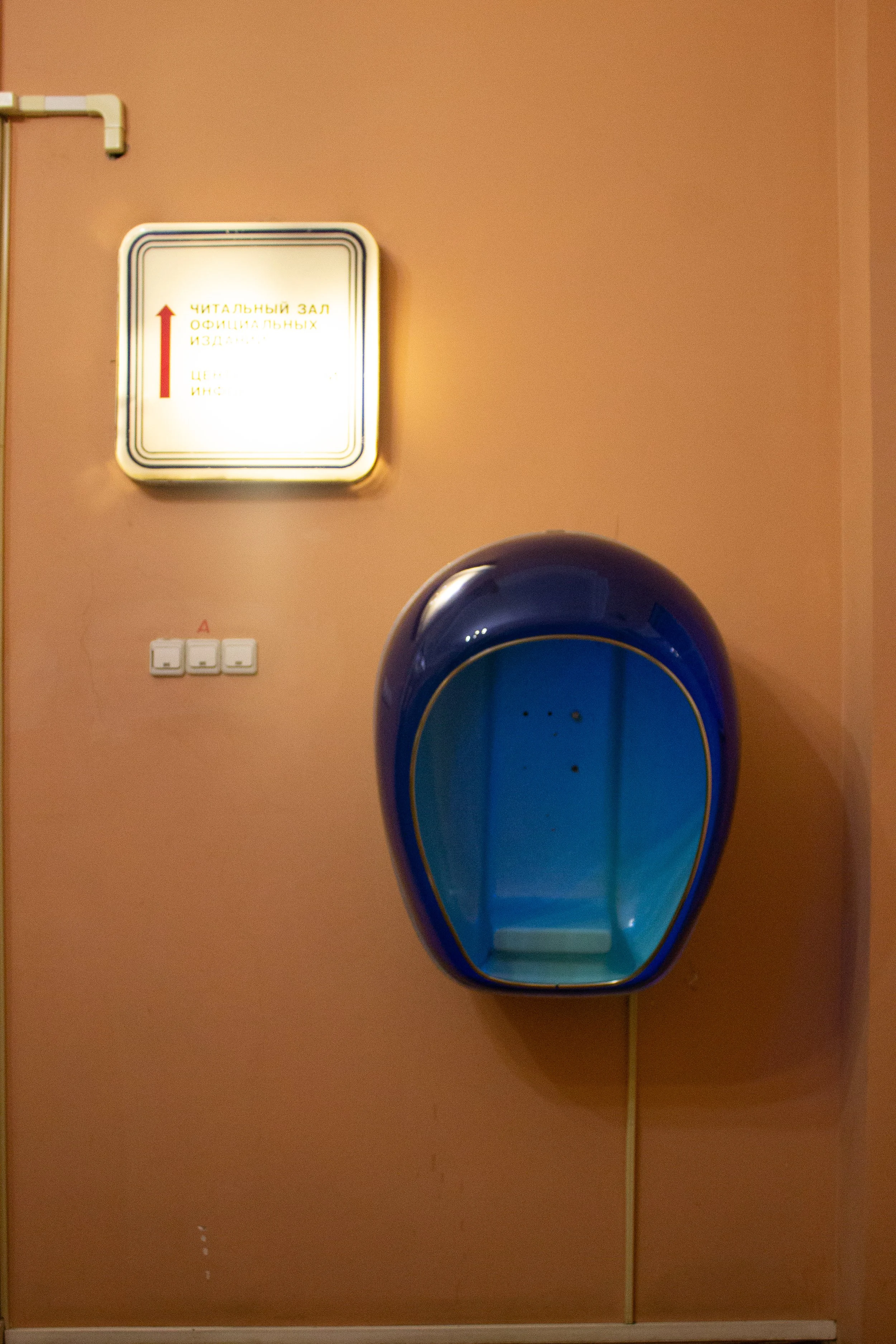
Back in the USSR (Moscow). Telephone booth.
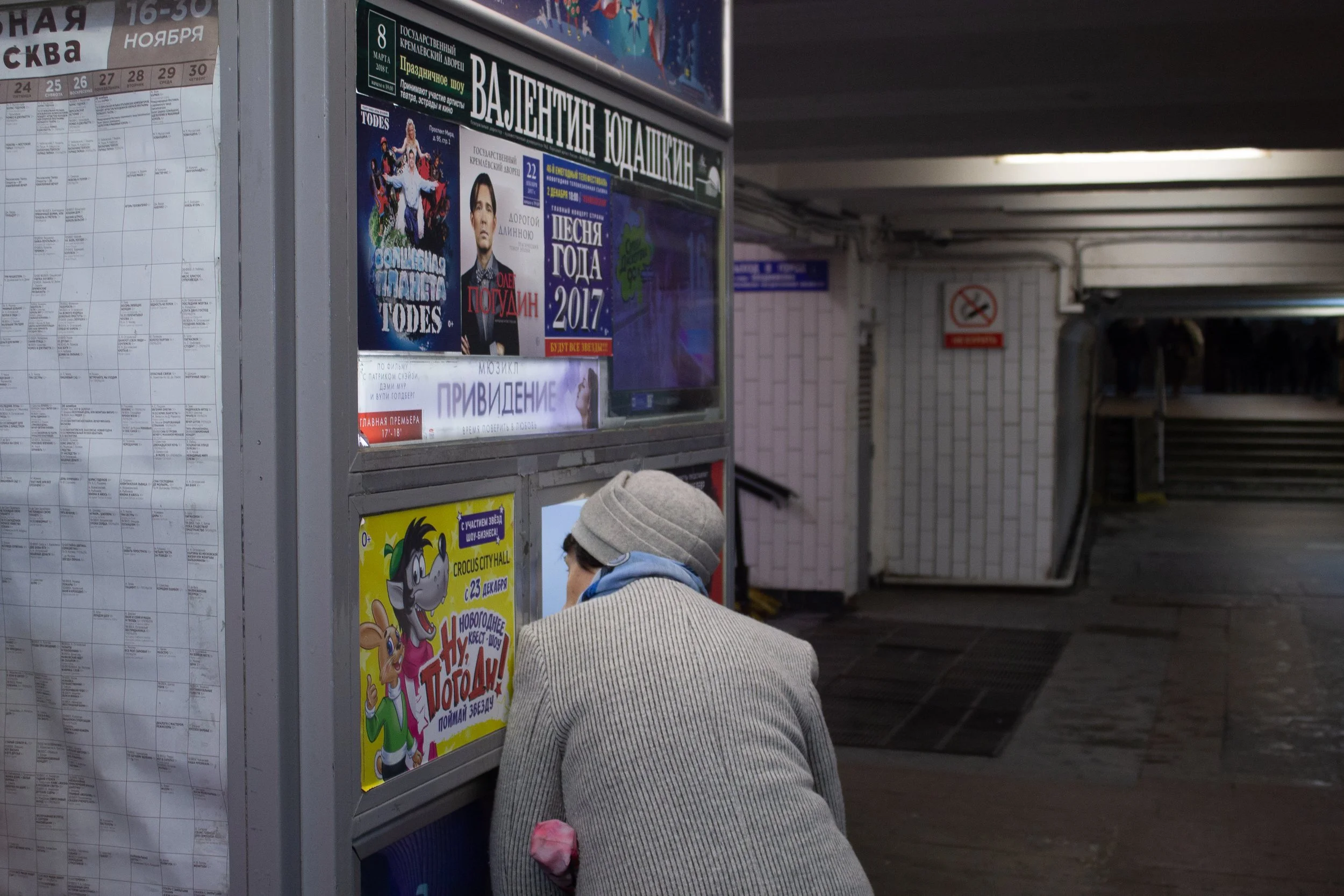
Back in the USSR (Moscow). Lady in metro station.
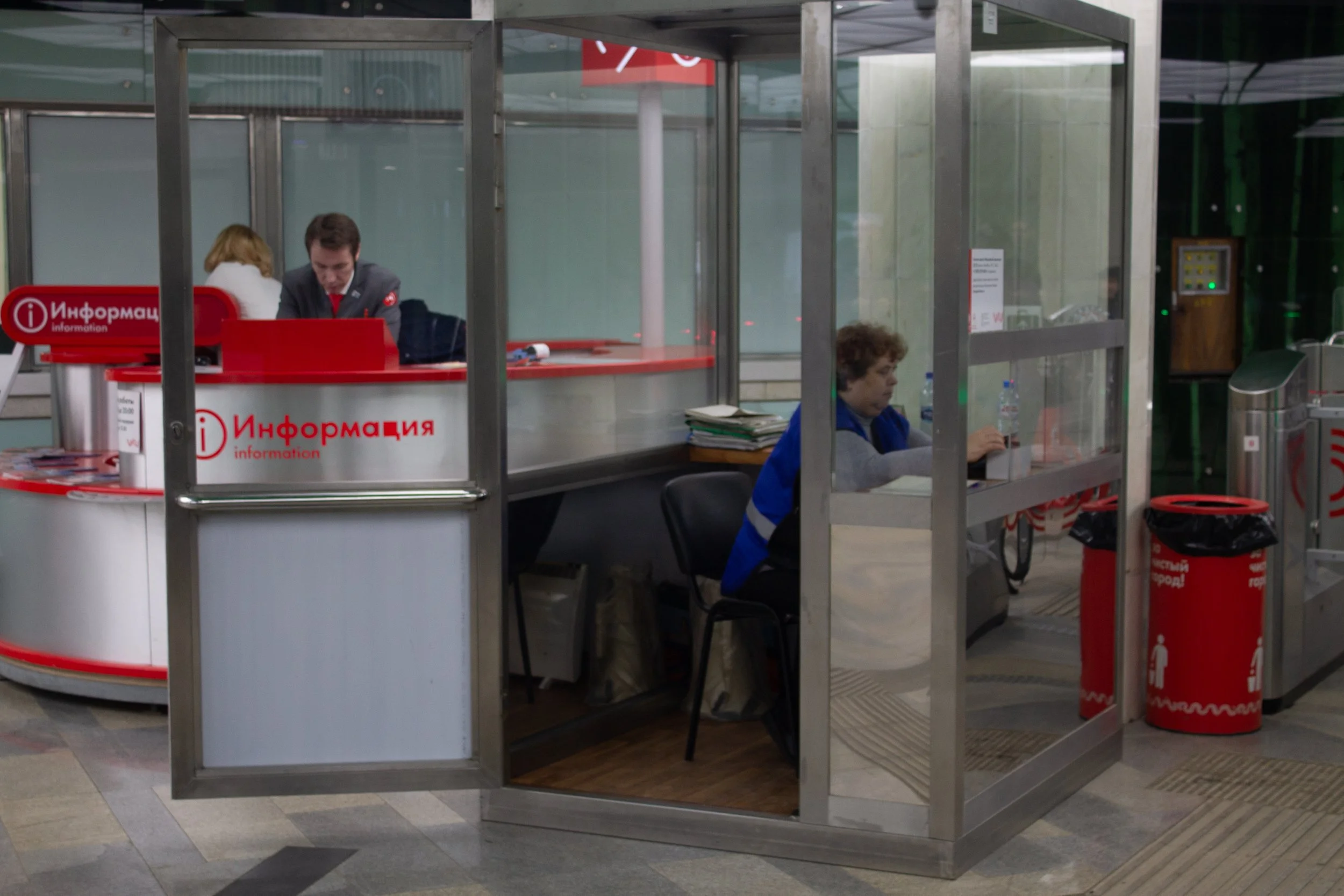
Back in the USSR (Moscow). Service workers in metro station.
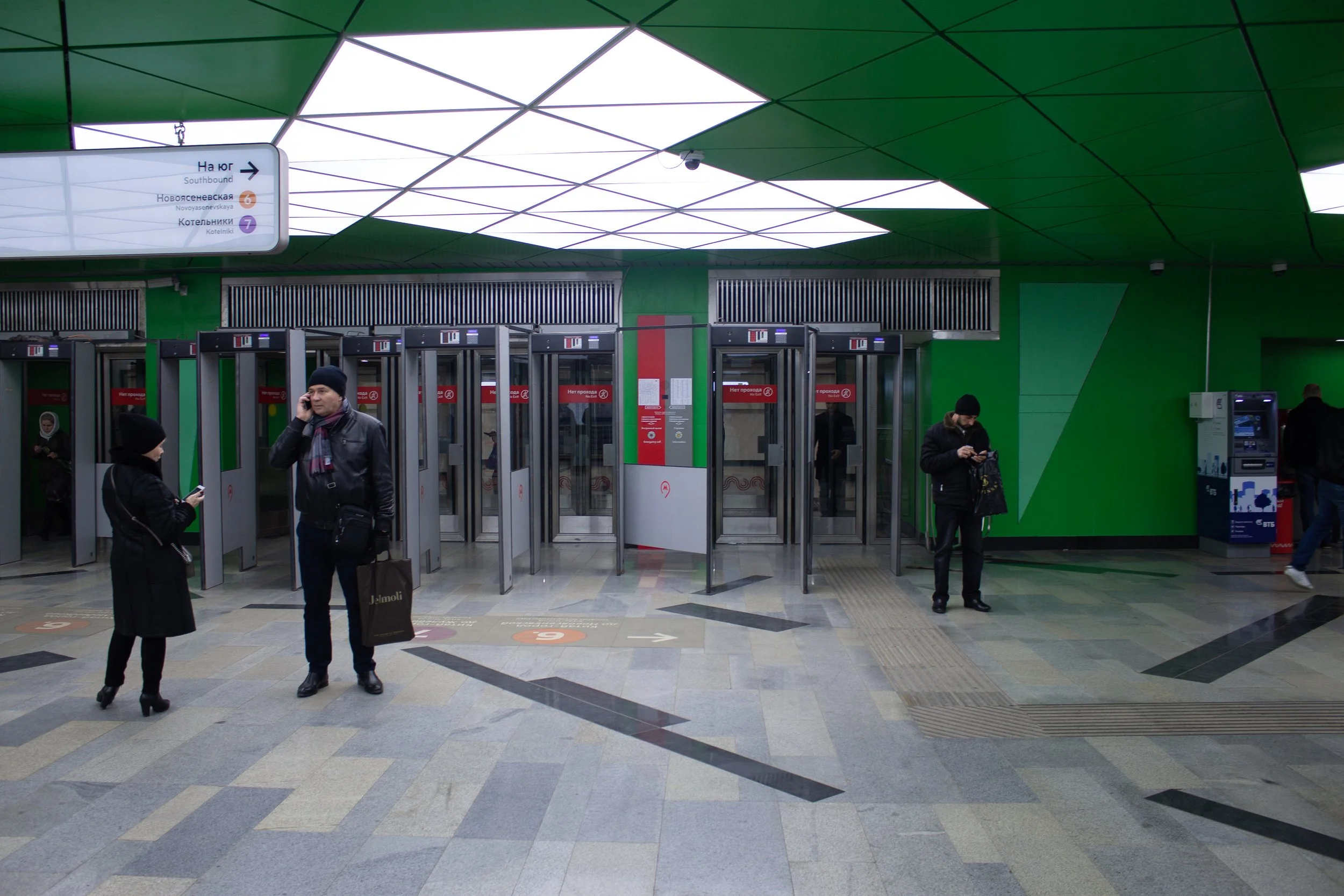
Back in the USSR (Moscow). People in metro station.
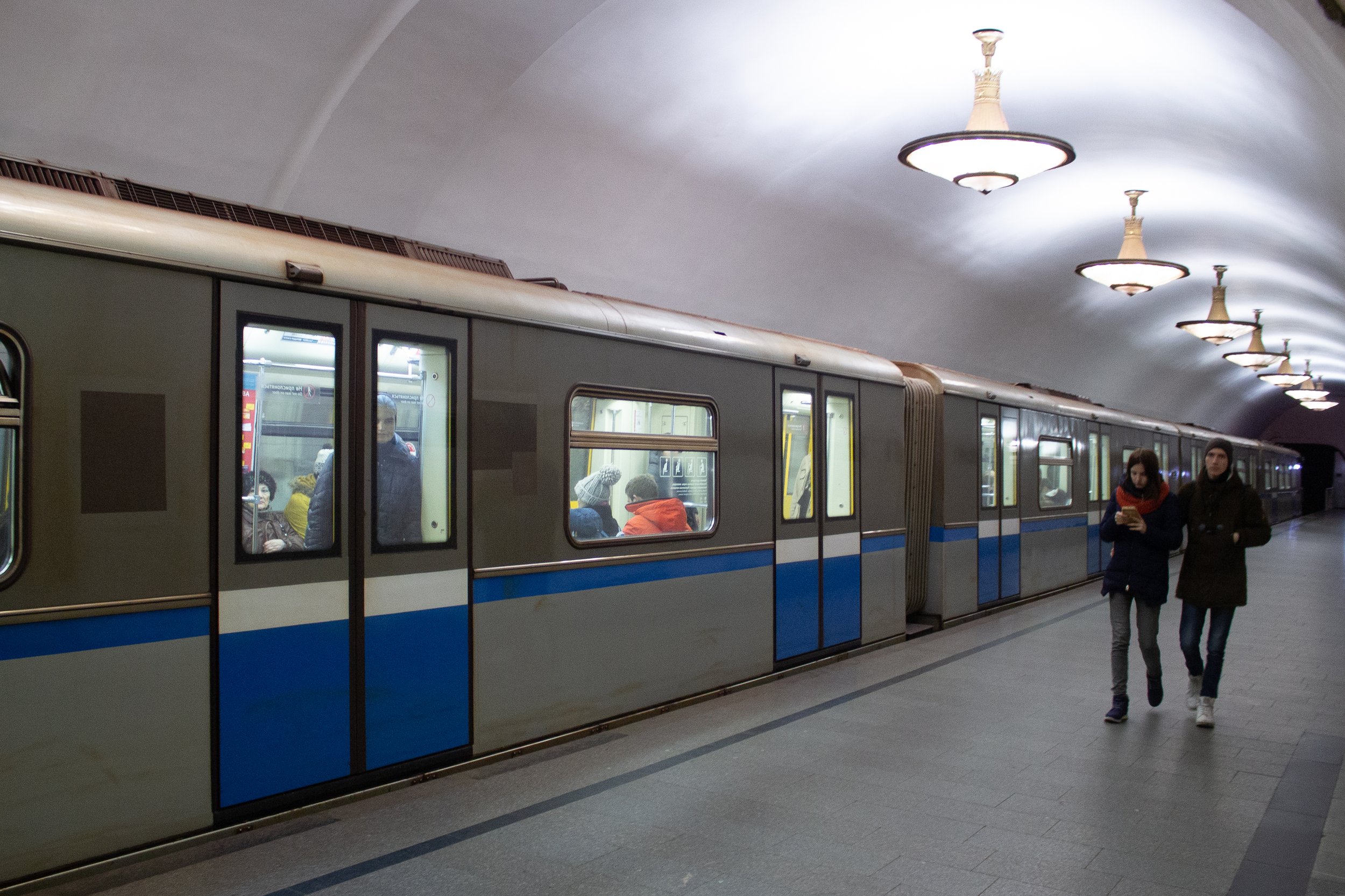
Back in the USSR (Moscow). Metro station.
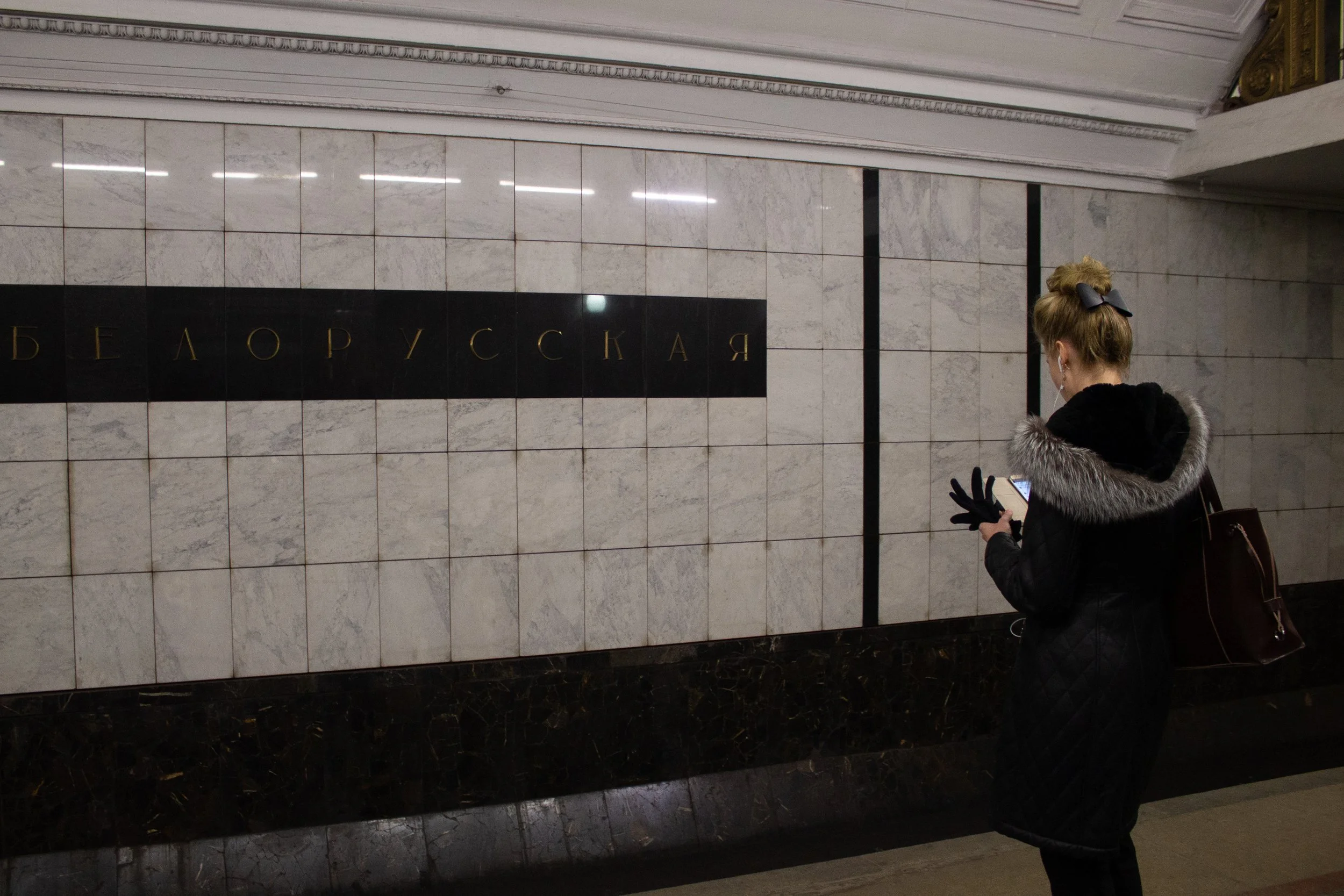
Back in the USSR (Moscow). Lady in metro station.
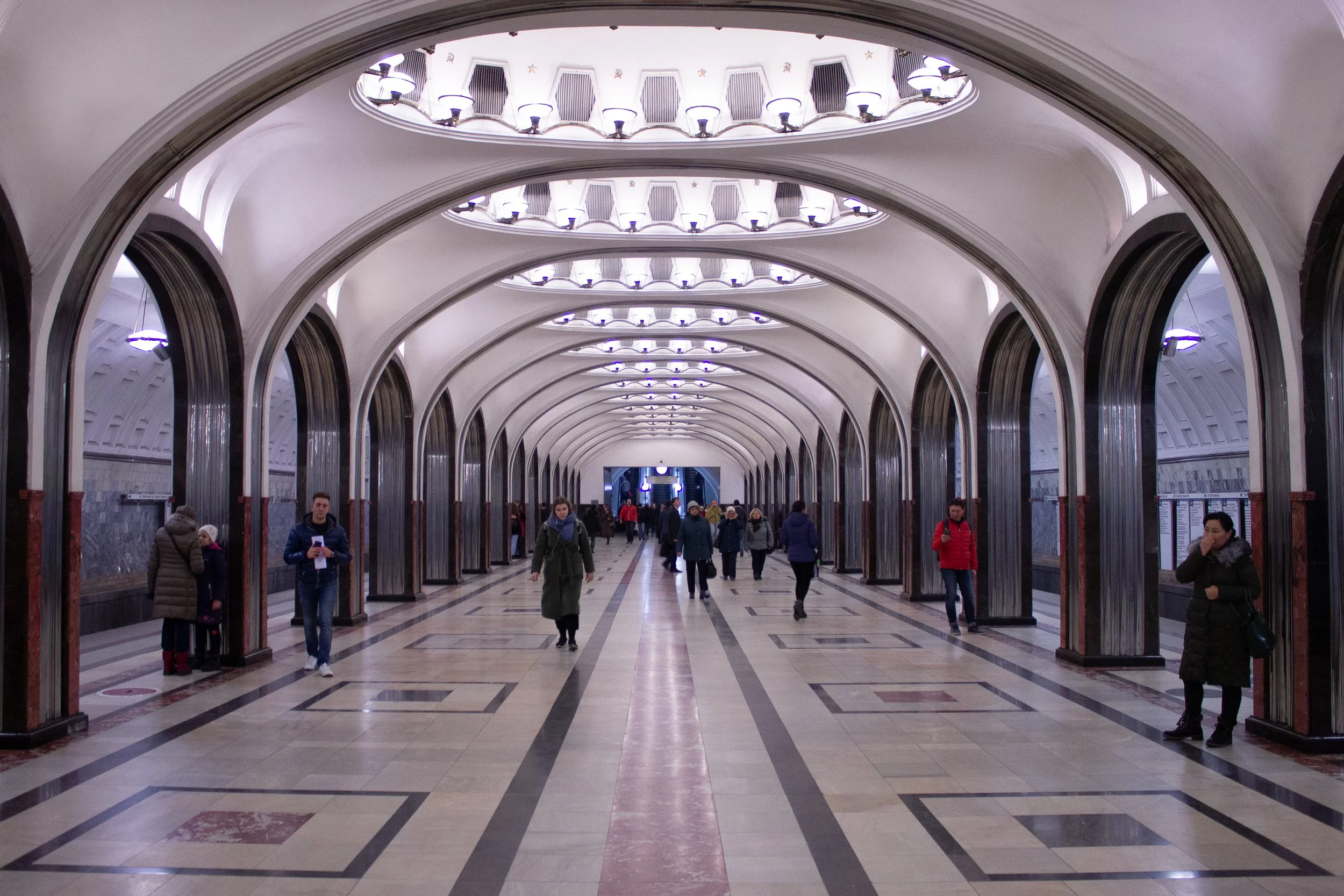
Back in the USSR (Moscow). Mayakovskaya metro station.
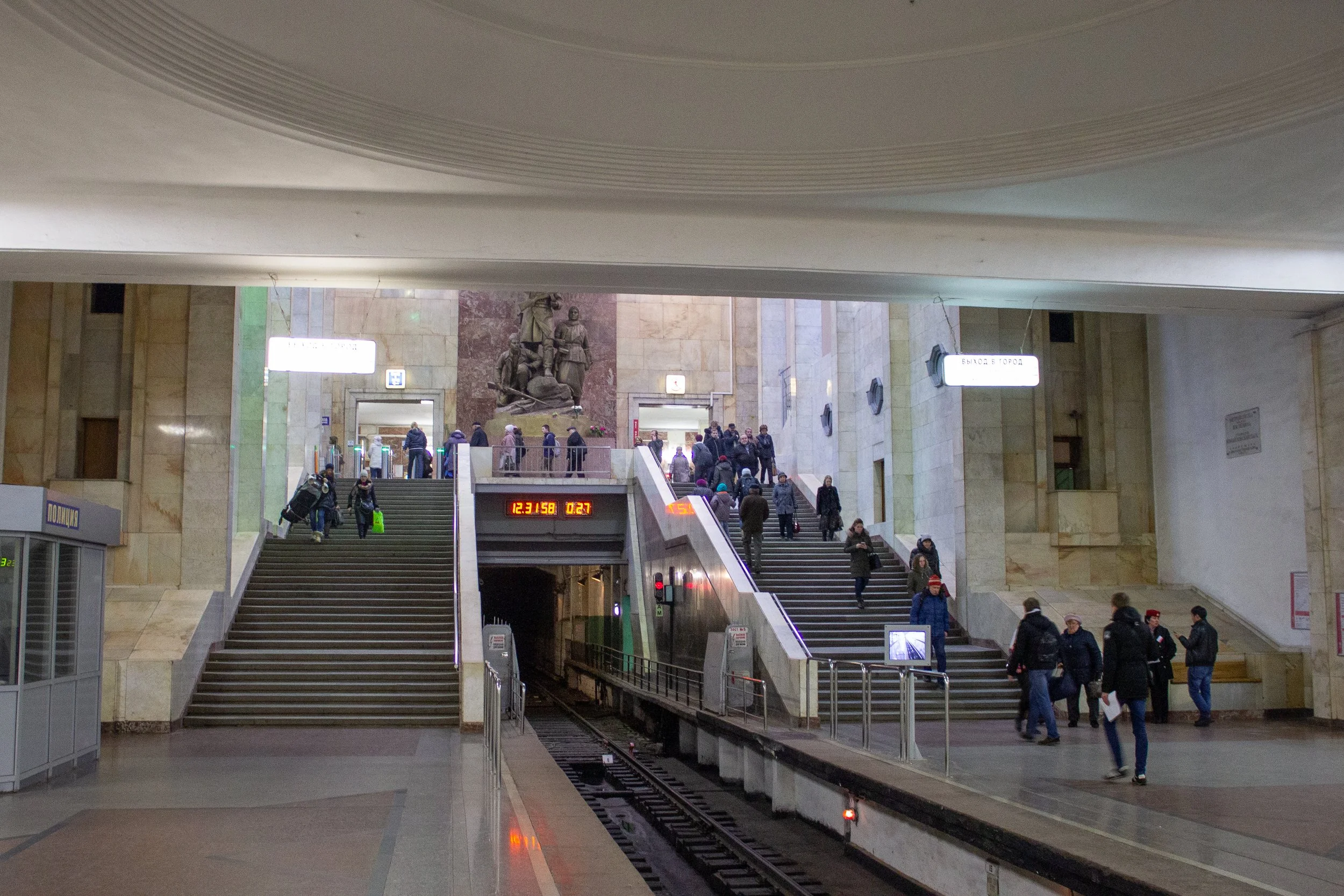
Back in the USSR (Moscow). Metro station and people.
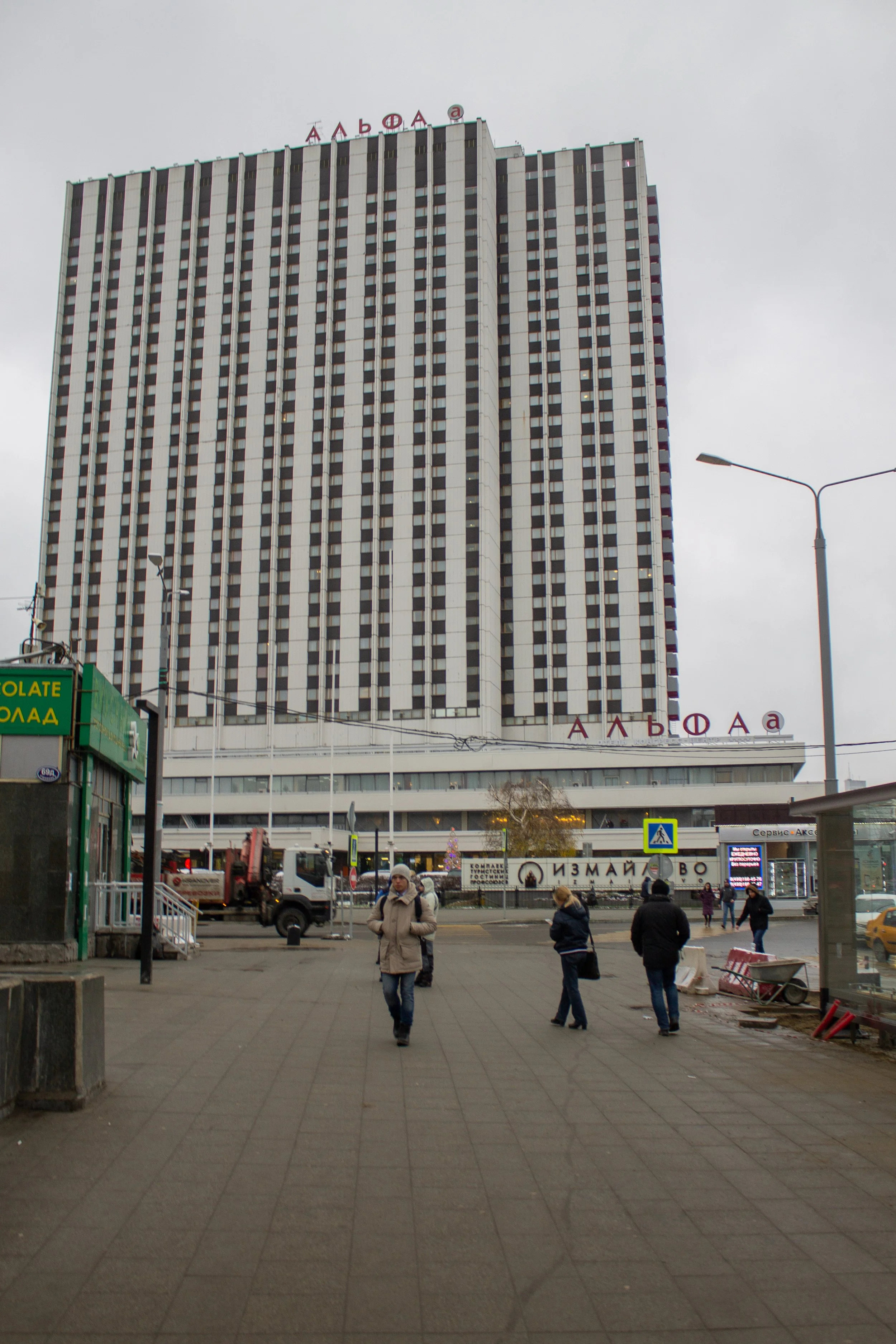
Back in the USSR (Moscow). Outside scenes.
Among my favourite places were the beautifully designed metro stations, each resembling an underground museum, and Gorky Park, where locals gathered despite the cold. In the evenings, the atmosphere shifted. The former Red October island had become the heart of Moscow's nightlife, with bars and clubs occupying old industrial buildings overlooking the river.
Dining out revealed another side of the city. Restaurant menus were often surprisingly concise, service felt more direct than what I was accustomed to in Western Europe, and yet tipping was still expected. It was a small cultural difference that stood out during the trip.
One of my strongest memories, however, was the people. Before I had the chance to observe them, I often felt they had already noticed us. Whether it was our Dr. Martens boots, our body language, or simply the fact that we spoke English, we were clearly visitors. Ordering in English at cafés or asking questions in museums only reinforced that feeling. It wasn't uncomfortable, but it made me more aware of how differently we moved through the city compared to the locals.
This series is less about Moscow's famous landmarks than about the atmosphere that surrounded them: a city balancing history and modernity, immense yet intimate, and quietly revealing itself through everyday moments.